
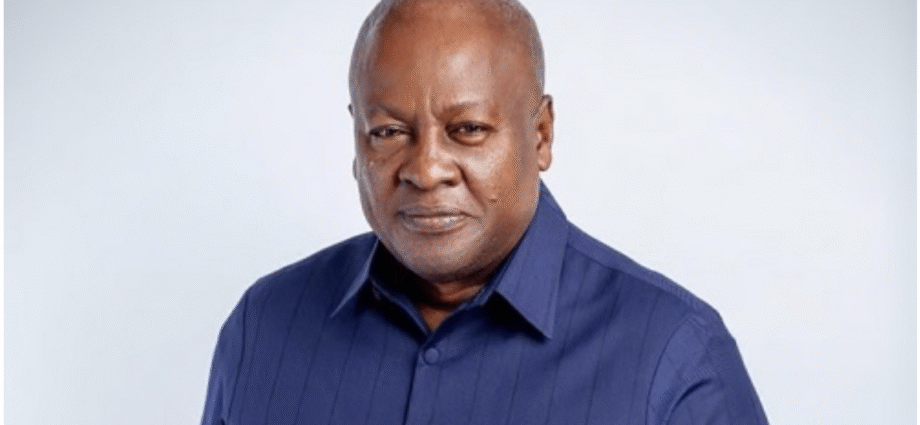
President John Mahama holds an interesting presidential record—the first of its kind in this country.
In a remarkable comeback effort following his crushing defeat in the 2016 elections, he was back in the saddle as president two electoral cycles later.
He is in good company
In the US, Donald Trump was booted out as president in 2020 and came back last year.
Just around the corner in Benin, Mathieu Kérékou also bounced back from being thrown out of the presidency in 1991 to reclaim it four years later, while in the UK, Sir Winston Churchill became Prime Minister from 1940 to 1945 and again from 1951 to 1955 after bouncing back from loss of office.
Political excitement
In the understandable giddy excitement following President Mahama’s remarkable comeback, some National Democratic Congress (NDC) supporters have been fantasising about the prospect of the president seeking another term when his current term comes to an end in 2028.
They insist that it is arguable that the two-term presidential limit imposed by Article 66(2) of the Constitution is only applicable following two consecutive terms.
To that effect, then, they argue, the 2012-2016 term served by Mr Mahama as President could be inconsequential, paving the way for him to run again in 2028 until 2032, when he would have served two consecutive terms.
To his credit, President Mahama has rightly dismissed any talk of an intention to run for another term in 2028.
Ordinarily, that should end the matter. However, some party adherents appear still enamoured by the idea and are bent on discussing it publicly.
The latest is a former MP for Adenta, Mr Kojo Adu Asare, who appeared in a discussion show on Asempa FM last week and insisted President Mahama deserves another term because the good people of Ghana want him to continue his ‘good works’. He also indicated it was time to test the law.
‘The law is the law’
Article 66(2) of the Constitution is crystal clear. “A person shall not hold office as President of Ghana for more than two terms.” End of story.
To attempt to smuggle the word ‘consecutive’ in between ‘two’ and ‘terms’ by way of seeking constitutional interpretation to that effect is most disingenuous.
‘Two terms’ is exactly what it says ‒ no need to twist, knead or massage those words to mean anything else.
It is the ordinary meaning in its simplest form.
If the framers of the Constitution intended for a break in presidential terms to wipe the slate clean, as it were, they would have expressly said so.
But that would have provided a dangerous and absurd scenario where, after two terms, a president would simply lie fallow for a term or two and come back again ‒ in effect, treating the presidency as a revolving door and making a mockery of a clear provision through deft, fancy political footwork.
That could not possibly have been the intention of the framers, especially when they were acutely aware of the dangers of entrenchment in political office, especially as our own political history had demonstrated earlier, with examples aplenty on the continent.
The framers were very unequivocal in their simplicity per the use of ‘two terms’, without any dressing, garnish or fanciful language, because they intended to send a clear, unambiguous message to presidential incumbents – after two terms, you are out. Simple.
In any event, the Supreme Court does not simply embark on an interpretation spree just because an applicant has invited it to do so.
There must be real ambiguity or honest confusion over the cited provision, as was established in the famous case of Tufuor v Attorney-General [1980].
I do not think any exists here.
Of course, any citizen is lawfully entitled to raise issues of constitutional interpretation with the Supreme Court.
But I doubt the apex court would lend itself to attempts to use it to circumvent the clear text of the law through some convoluted purposive interpretation.
What if the people want him?
I do not know how Mr Adu Asare and others like him arrived at the conclusion that the people of Ghana want President Mahama to go for a third term because of his ‘good works’.
Their recourse does not lie in ‘testing the law’ in the Supreme Court, but rather amending it through constitutional provisions and processes to give effect to the claimed wishes of the people.
Article 66(2) is an entrenched provision of the Constitution, which means it requires an elaborate process to amend it.
The framers knew that some ambitious politicians could one day be tempted to try jettisoning this terribly important provision and so wisely entrenched it under Article 290 along with several others in a dictator-proof enclosure.
After the bill for amendment has been read the first time in Parliament, having been deliberated upon and approved by the Council of State, it cannot proceed further unless it has been submitted to a referendum throughout Ghana, with at least 40 per cent of eligible voters participating in it, and 70 per cent of those who voted casting their vote in favour.
Only then must Parliament pass the bill.
Within the context of our highly polarised political space, I believe, respectfully, that it is rather naive to expect that a bill for an amendment of this provision would pass.
Indeed, many elements within the NDC, with their own preferred candidates for the 2028 presidential elections, would vote against the bill in a referendum.
‘Nip it!’
Political apparatchiks and hangers-on have a way of flattering presidents and feeding their egos with honeyed words and assurances of a great swell of public affection.
They urge them to remain in office because the people ‘yearn’ for them, thereby putting these presidents on a ‘Messiah’ or ‘Redeemer’ pedestal of sorts.
President Mahama must ignore such dangerous flattery and stick to his guns on the matter.
This purported conversation over a third presidential term ought to be nipped in the bud because it just will not fly beyond the arid grasslands of idle chatter.
We have a nation to build and our national conversation must revolve around serious, substantive issues.
