
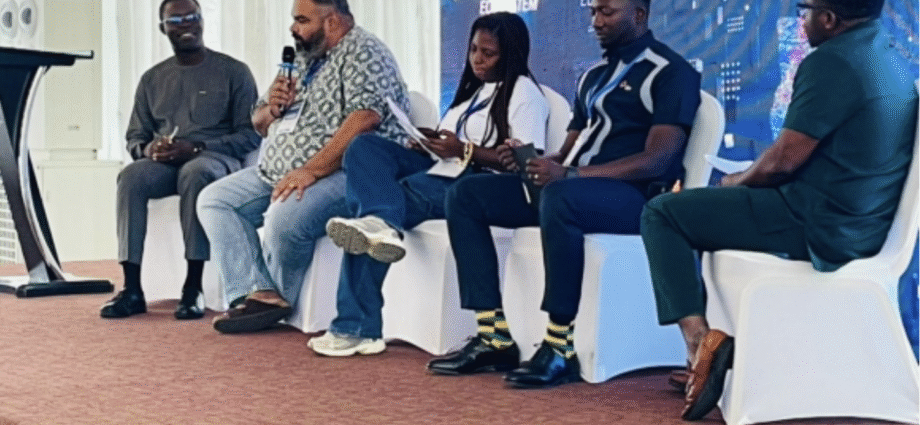
The Ghana Hubs Network has held its 2025 Annual Gathering of Hubs in Accra to deepen collaboration and innovation across the country’s entrepreneurship landscape.
Held under the theme “Resilient Hubs, Thriving Futures: Strengthening Ghana’s Innovation Ecosystem”, the two-day event brought together hub leaders, entrepreneurs, development partners, and policymakers to explore pathways for accelerating inclusive digital transformation and job creation.
Chairperson of the Ghana Hubs Network, Yaw Adu-Gyamfi, highlighted the growing impact of innovation hubs nationwide, noting that over 100 active hubs—80 of which are under the Ghana Hubs Network—have trained 12,000 youth and women, and supported more than 6,000 startups and small businesses.
In 2024 alone, the network mobilised $4 million in funding from partners such as the National Entrepreneurship and Innovation Programme (NEIP), GIZ, Mastercard Foundation, and Ashesi University.
He stressed the need for a supportive policy environment and called for the swift passage of the Startup and Innovation Bill. Adu-Gyamfi also urged academia, government, and the private sector to deepen their commitment to youth innovation and entrepreneurship.
A major highlight of the gathering was the launch of a Gender-Responsive Toolkit, developed in collaboration with GIZ and GFA Consulting Group, to promote the inclusion of women and persons with disabilities within Ghana’s innovation space.
Adu-Gyamfi emphasised that Ghana’s innovation future must be built beyond Accra and powered by young innovators and changemakers across all regions.
Government commits to strengthening hubs
The Deputy Chief Executive Officer of NEIP, Joan Selasie Ahiawordor, reaffirmed the government’s commitment to supporting innovation hubs nationwide to accelerate youth entrepreneurship and inclusive economic growth.
Speaking on behalf of the NEIP CEO, she described the event as “a vital platform where impact is created, ideas are shaped, and partnerships are built to drive the future of Ghana’s innovation ecosystem.”
She noted that entrepreneurship is one of the most powerful tools to reduce unemployment, foster innovation, and drive inclusive growth. NEIP, she said, remains focused on three key areas: capacity building for entrepreneurs through training and mentorship; improving access to funding and markets; and strengthening the broader entrepreneurship ecosystem through strategic partnerships.
Highlighting NEIP’s flagship Adwumawura Programme, she described it as a bold intervention aimed at creating at least 10,000 businesses annually, with a particular focus on women, persons with disabilities, and underserved communities.
“The Adwumawura Programme is not just about handing out capital. It’s a full support system—business development services, mentorship, training, and market access—to ensure sustainability,” she explained.
She further emphasised that NEIP views hubs as “foundational partners” in Ghana’s entrepreneurial journey. “Hubs are where many entrepreneurs take their first steps. You are the first responders and front-liners of building resilience,” she said.
Ahiawordor also announced enhanced collaboration with hubs through co-hosted incubator and accelerator programmes, direct financial and technical support, and two-way policy feedback mechanisms.
To the entrepreneurs and ecosystem players gathered, she affirmed: “NEIP is here for you—whether you’re just starting or scaling. We believe in your potential and are investing in your future.”
GIZ reaffirms support, urges stronger collaboration
Emmanuel Mumuni, Programme Component Manager at GIZ, reiterated the agency’s strong support for the Ghana Hubs Network, describing innovation hubs as critical to Ghana’s sustainable economic development.
“Years ago, hubs weren’t even part of the mainstream conversation. Today, it’s hard to find any SME in Ghana that hasn’t interfaced with a hub—whether through training, funding, capacity building, or mentorship,” he observed.
Mr Mumuni said digital transformation remains a key pillar of GIZ’s work in Ghana, particularly around job creation, entrepreneurship, and macroeconomic development.
