
Organon Sub-Saharan Africa has called for stronger multi-sector collaboration, sustainable financing and deliberate policy action to curb unplanned pregnancies across the continent, describing it as one of Africa’s most urgent public health and development challenges.
The company amplified this message at the WHX Leaders’ Summit today in Accra, where government officials, global health institutions and private-sector leaders gathered to discuss the future of healthcare investment and innovation in Africa.
Organon SSA hosted a multisectoral session on sustainable financing for reproductive health and joined a high-level panel on advancing women’s health. Both engagements reinforced the organisation’s push for family planning to be placed at the centre of Africa’s development agenda. The company stressed that reducing unintended pregnancies is essential to lowering maternal mortality, improving access to education and boosting economic productivity.
During the side engagements, participants explored how family planning can be integrated into Universal Health Coverage strategies, financed more sustainably, and delivered through partnerships involving governments, private-sector actors, community groups and global health organisations. Organon highlighted its regional work, including a collaboration with FP2030 and Uganda’s Ministry of Health, which demonstrated that domestic resource mobilisation and evidence-based planning can significantly reduce unintended pregnancies while strengthening national health systems.
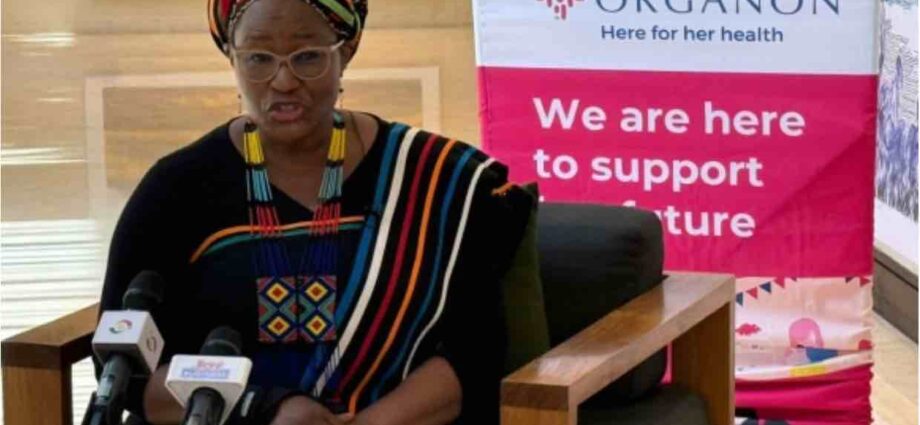
Speaking on the sidelines of the Summit, Mokgadi Mashishi, Country Lead for Africa Access Markets at Organon South Africa, said the company’s efforts are anchored in a commitment to expanding access to sexual and reproductive health services. She stressed the importance of coordinated, multi-layered action. “We are expanding access to contraceptive, and we have different methods that are available. We also work with governments and other partners like the UNFPA and FP2030 to bring more attention to why investing in family planning is a critical investment,” she said.
Mashishi emphasised that tackling unplanned pregnancies requires more than improving commodity supply: “The solution has to be multi-pronged. Providing product is one aspect of it. More importantly, we also need the system revolution as well. There is a need for education, and this education needs to be at multiple levels. The community needs to get the information in the way that it makes sense to them.” She added that respectful care from health professionals, supportive cultural practices, reliable supply chains and political will all play pivotal roles in ensuring women and young people can make informed reproductive choices.
Organon has committed globally to contributing to the prevention of 120 million unplanned pregnancies, with Sub-Saharan Africa forming the majority of that target. Mashishi noted that effective family planning access is directly linked to empowerment: “If you can space the births and decide on when to have children, if you want to have children and how many you want to have, then your potential is limitless. You’ll be able to access education. We are able to drive the sustainable development goals around gender equality.”
She described unplanned pregnancies as one of the biggest gaps in women’s health on the continent, particularly affecting Africa’s vast youth population. She observed that without equitable access to reproductive health, Africa’s aspirations under Agenda 2063 may remain out of reach. Mashishi argued that long-term solutions must integrate policy reforms, financing innovations, community engagement and digital technologies, noting that Organon is advancing digital tools, including a new health chatbot, to strengthen information access.
The Summit also highlighted Organon’s broader partnerships, including initiatives with civil society and African governments to align policies and financing with reproductive health priorities. Participants echoed that sustainable solutions must be driven by domestic resources rather than dependence on donor funding.
Reflecting on the company’s role and the direction of women’s health conversations in Africa, Mashishi said her message to leaders was simple: “Let’s be intentional. Let’s be action orientated. And then let’s also not look at a woman or a man, the patient that we…the end user of the health services, as just a recipient. They should be part of shaping what the provision of proper healthcare should look like.”
The WHX Summit concluded with renewed commitments from governments, private-sector partners and global institutions to invest in reproductive health as a pathway to stronger economies, healthier families and more resilient national systems.
